



Interleukin Related Agonist
- 1
-
GP130 receptor agonist-1
 0 Images
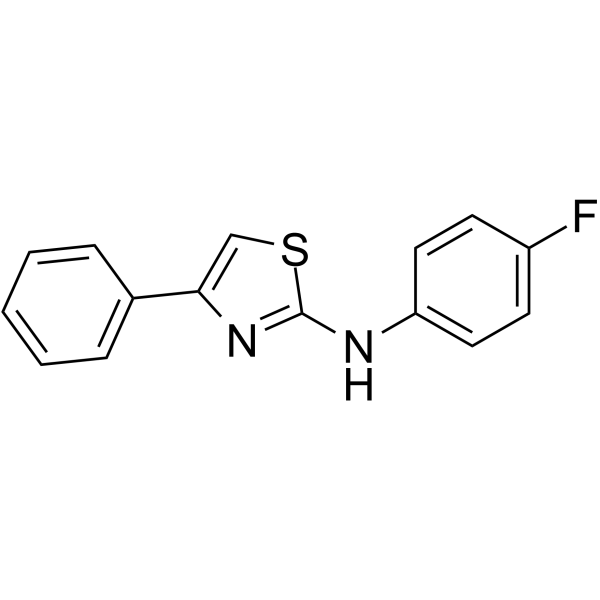
GP130 receptor agonist-1 is a potent, brain-penetrant and orally active GP130 receptor agonist. GP130 receptor agonist-1 has a neuroprotective effect on NMDA-induced neurotoxicity.
-
Nogapendekin alfa (his tag)
 0 ImagesSynonyms: IL-15N72D
Nogapendekin alfa his tag is an immunostimulant that binds to the IL-2RβγC complex on immune cells. Nogapendekin alfa his tag stimulates the proliferation and activation of natural killer cells and CD8+ T cells, upregulates the expression of granzyme B and perforin, and activates the innate and adaptive immune branches. Nogapendekin alfa his tag forms ALT-803 with IL-15RαSuFc; this complex has an extended biological half-life, improved biodistribution and retention in lymphoid tissues, enhances natural killer cell-mediated rituximab-dependent cellular cytotoxicity, and reduces tumor burden and improves survival when combined with anti-CD20 monoclonal antibody therapy. Nogapendekin alfa his tag can be used in the research of non-Hodgkin's lymphoma.
-
TBPH
 0 ImagesArt. -Nr.: HY-W018587CAS. Nr.: 26040-51-7
TBPH is a brominated flame retardant. TBPH enhances hepatic steatosis, inflammation, and fibrosis in mice with nonalcoholic steatohepatitis (NASH). TBPH induces dysregulation of phospholipid metabolism, reducing cardiolipin (CL) and phosphatidylserine (PS) levels. TBPH leads to impaired endoplasmic reticulum-mitochondria (ER-Mito) contacts, subsequently causing mitochondrial dysfunction. TBPH induces lung injury through an inflammatory response mediated by mitochondria-derived ds-DNA. TBPH can be used to study the role of MFN2-mediated ER-mitochondria contacts in lipid metabolism homeostasis.
-
PY109
 0 Images
PY109 is an orally active and highly selective aryl hydrocarbon receptor (AHR) agonist. PY109's EC50 values in human-derived HepG2 and mouse Hepa-1c1c7 cells are 1.2 nM and 1.4 nM respectively. PY109 significantly upregulates the expression of CYP1A1 and IL-22, and inhibits the expression of IL-17A. PY109 significantly improves colitis in mice. PY109 can be used for research on colitis.
-
STING agonist-45
 0 Images
STING agonist-45 is a selective STING agonist (EC50 = 0.28 μM). STING agonist-45 activates the innate immune response through the cGAS-STING pathway, upregulating key markers such as p-TBK1 and IRF3. STING agonist-45 exhibits robust STING activation in human peripheral blood mononuclear cells (PBMCs), inducing the production of type I interferons (such as IFN-β) and downstream cytokines (such as TNF-α and IL-6). STING agonist-45 enhances anti-tumor immunity, inhibits tumor growth, and increases CD8+ T cell infiltration in mouse models. STING agonist-45 is promising for the study of STING-related diseases.
-
PROTAC HPK1 Degrader-5
 0 ImagesArt. -Nr.: HY-175547CAS. Nr.: 3108744-13-1
PROTAC HPK1 Degrader-5 is an orally effective and selective HPK1 PROTAC degrader with a DC50 of 5.0 nM. PROTAC HPK1 Degrader-5 recruits the CRBN E3 ligase to specifically induce the degradation of HPK1 via the ubiquitin-proteasome system, which in turn significantly inhibits SLP76 phosphorylation and enhances the activation of the ERK pathway, thereby stimulating the release of IL-2 and IFN-γ. PROTAC HPK1 Degrader-5 can be used in studies related to tumor immunity (e.g., colorectal cancer).
-
CIDD-8633
 0 ImagesArt. -Nr.: HY-175202CAS. Nr.: 1428356-95-9
CIDD-8633 is a potent DDR2 inhibitor with an IC50 of 6.105 μM. CIDD-8633 inhibits cell migration and halts the cell cycle and induces apoptosis, significantly suppressing pancreatic ductal adenocarcinoma (PDAC) tumor growth. CIDD-8633 can be used for the study of pancreatic cancer such as PDAC.
-
ABX196
 0 ImagesArt. -Nr.: HY-156997CAS. Nr.: 1161877-58-2
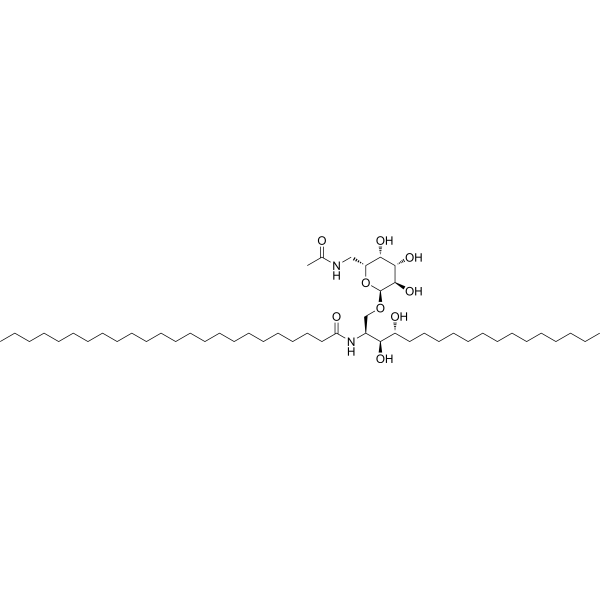
ABX196 is NKT agonist. ABX196 is an analog of the parental compound -GalCer.
-
RIPK2-IN-8
 0 ImagesArt. -Nr.: HY-175026CAS. Nr.: 3036254-29-9
RIPK2-IN-8 is an orally active and highly selective RIPK2 inhibitor (IC50 = 11 nM). RIPK2-IN-8 is highly selective for RIPK2 over RIPK1 (IC50 > 30,000 nM) and has a moderate inhibitory effect on RIPK3 (IC50 = 44.61 nM). RIPK2-IN-8 inhibits the NOD2-RIPK2 signaling pathway and the expression of the inflammatory cytokines IL-6 and TNFα, thereby exerting anti-inflammatory effects. RIPK2-IN-8 has demonstrated anti-inflammatory and hepatoprotective effects in an acute liver injury (ALI) model and can be used in ALI research.
-
NOD2 agonist 4
 0 ImagesArt. -Nr.: HY-179009
NOD2 agonist 4 (Compound 12b) is a potent NOD2 agonist with an EC50 of 44.1 nM. NOD2 agonist 4 induces cytokine production (MCP-1, IL-6 and IL-8) in peripheral blood mononuclear cells (PBMCs), both alone and in combination with Lipopolysaccharide (LPS) (HY-D1056). NOD2 agonist 4 can be used for the studies of NOD2-targeted immunomodulator or vaccine adjuvant.
-
REGN-10597
 0 ImagesArt. -Nr.: HY-P992161
REGN-10597, composed of an anti-huPD-1-targeting antibody and IL2Ra-IL2 moiety, is a PD-1-dependent IL-2 agonist. REGN-10597 binds PD-1 to deliver masked native IL-2 to PD-1+ T cells, engaging trimeric IL-2 receptors to activate downstream signaling. REGN-10597 can be used for the research on melanoma, prostate cancer, colorectal cancer, and ovarian cancer.
-
FGT-4
 0 ImagesArt. -Nr.: HY-172934
FGT-4 is a FR-β-targeted chimeric molecule. FGT-4 acts as a TLR7 agonist. FGT-4 binds to FR-β to enable delivery to tumor-associated macrophages and myeloid-derived suppressor cells. FGT-4 promotes the secretion of iNOS (associated with M1 macrophages) and the pro-inflammatory cytokine IL-6, and enhances the proliferation of cytotoxic CD8+ T cells. FGT-4 can be used for the research of breast cancer.
-
CDK6/9-IN-2
 0 ImagesArt. -Nr.: HY-175013CAS. Nr.: 3068529-24-5
CDK6/9-IN-2 is a highly active dual inhibitor of CDK6 (IC50 = 15 nM) and CDK9 (IC50 = 22 nM). CDK6/9-IN-2 is selective for CDK2, CDK8, and CDK11. CDK6/9-IN-2 inhibits the proliferation of HaCaT cells induced by IFN-γ/TNF-α and suppresses the STAT3 pathway and the expression of inflammatory factors. CDK6/9-IN-2 can alleviate psoriatic dermatitis and is useful in psoriasis research.
-
NO-prednisolone (Standard)
 0 ImagesSynonyms: NCX-1015 (Standard)
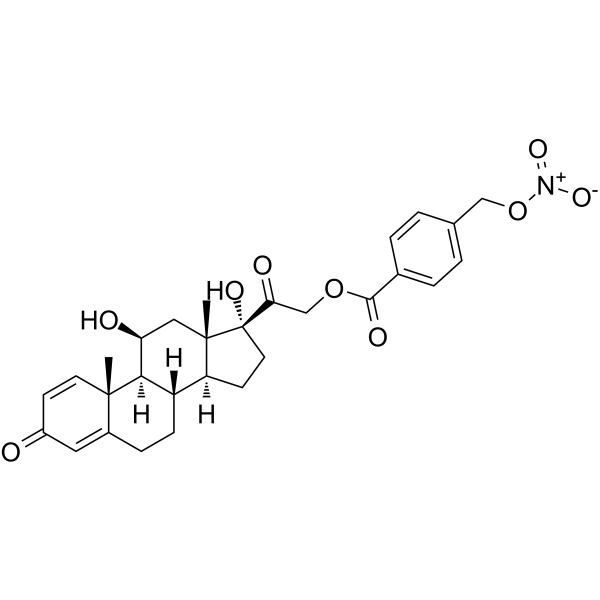
NO-prednisolone (Standard) (NCX-1015 (Standard)) is the analytical standard of NO-prednisolone (HY-101757). This product is intended for research and analytical applications. NO-prednisolone is a nitric oxide (NO)-releasing derivative of Prednisolone. NO-prednisolone potently stimulates IL-10 production in vivo.
- 1



